Rehabilitation Matched to the Demands of Sport
Sports Injury Rehabilitation in Lake Charles for athletes and active patients working toward a structured return to physical activity
Sports injury rehabilitation at Thrive Physical Therapy begins with a systematic evaluation of how an injury affects strength, flexibility, coordination, movement mechanics, and sport-specific conditioning—the same physical qualities that determine whether a return to activity is appropriate and safe. Thrive works with athletes and active patients in Lake Charles whose injuries range from acute sprains and strains to overuse conditions requiring progressive rehabilitation before full activity resumes. Evaluation findings establish the baseline from which the rehabilitation program is built, rather than applying a general protocol based on injury type alone.
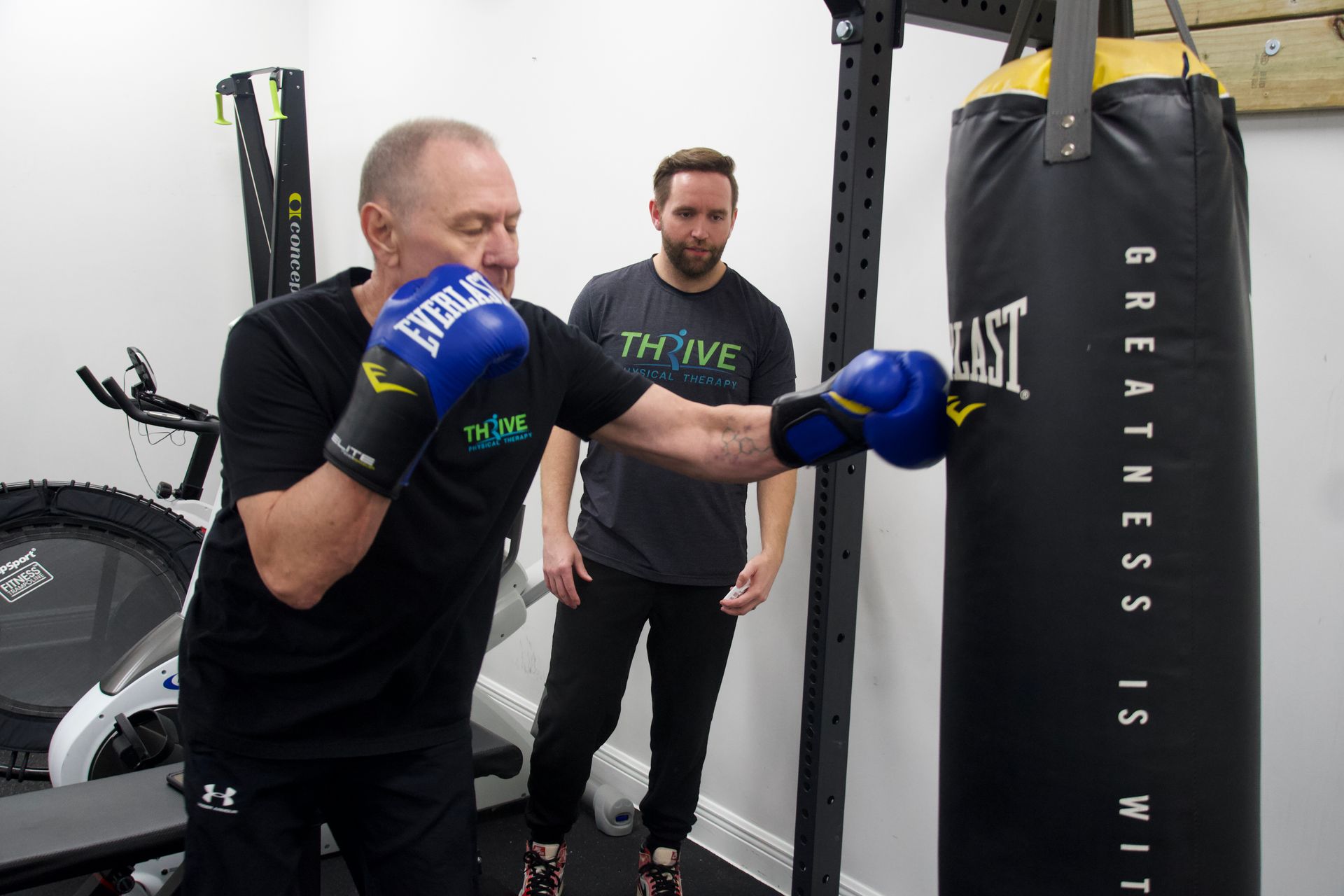
Rehabilitation is structured around the physical demands of each patient's sport or activity, not just the affected tissue. A distance runner managing a knee injury requires different loading progressions and movement pattern corrections than a contact sport athlete working through the same diagnosis. That specificity extends into later rehabilitation phases, where sport-specific movement patterns, agility tasks, and conditioning work are introduced progressively as evaluation confirms readiness.
Request an evaluation at Thrive Physical Therapy to assess current strength, movement, and conditioning levels following your injury.
What Sports Injury Rehabilitation Actually Accomplishes
Rehabilitation for sports injuries addresses the physical factors that separate healed tissue from a patient ready to return to full activity. Pain resolution and tissue healing mark the beginning of rehabilitation, not the endpoint—strength deficits, coordination gaps, and movement pattern changes that develop during injury and recovery require targeted work before sport-specific demands can be safely reintroduced.
Following a structured rehabilitation program, athletes and active patients are evaluated against functional benchmarks rather than cleared based on time alone. Thrive uses functional movement assessment and sport-specific testing at appropriate stages to determine when progressive loading, agility work, and full activity resumption are appropriate for each patient's clinical picture.
Injury prevention work is incorporated as the patient progresses, including assessment of the movement patterns and training habits that may have contributed to the initial injury. Parents of injured youth athletes and coaches working with recreational or competitive participants can request evaluations to understand rehabilitation requirements and return-to-sport criteria.
What Athletes and Parents Ask About Sports Rehabilitation
Athletes and parents managing sport-related injuries often have specific questions about the rehabilitation process. These answers address how sports injury rehabilitation is structured at Thrive Physical Therapy.
What does the sports rehabilitation evaluation include?
The therapist assesses strength, flexibility, coordination, movement mechanics, and sport-specific function to establish the starting point for a structured rehabilitation program.
How is the rehabilitation program matched to my specific sport?
Activities, loading progressions, and movement tasks are selected based on the physical demands of your sport and the functional capacity revealed by evaluation.
What determines when a return to sport is appropriate?
Return-to-sport decisions are based on measurable functional benchmarks—strength ratios, movement quality, and sport-specific performance indicators—rather than time-based assumptions.
Why is conditioning work included in sports injury rehabilitation?
Conditioning deficits develop during injury-related rest and must be addressed progressively before high-demand activity resumes to reduce the risk of reinjury.
How does the heat and humidity in Lake Charles affect rehabilitation pacing for outdoor athletes?
Elevated temperature and humidity increase physiological demand during conditioning work, which physical therapists at Thrive factor into exercise progression for athletes training or competing in outdoor conditions.
Thrive Physical Therapy works with athletes at all levels managing the physical demands of return-to-sport rehabilitation. An initial evaluation establishes current functional capacity and determines what the rehabilitation program should prioritize.
Speak With A Board Certified Specialist Today!
Is your pain making it difficult for you to concentrate?
Are you hoping it will just go away but it’s still hurting you?
If you answered “Yes” to any of those questions, you should call us and make an appointment to see one of our qualified Physical Therapist. We will interview you, find out your problem, layout the customized plan for you and work with you personally.
Call one our offices now at (337) 990-5621 or request an appointment:

Ask a Specialist
Contact Us
We will get back to you as soon as possible.
Please try again later.