
Balance and Dizziness Traced to Their Source
Vestibular and Balance Therapy in Lake Charles for dizziness, vertigo, unsteadiness, and balance limitations affecting safe daily movement
When vestibular assessment is complete and treatment is matched to clinical findings, patients managing dizziness, vertigo, and unsteadiness have a documented picture of the mechanisms driving their symptoms and a treatment plan directed at those specific factors. Thrive Physical Therapy provides vestibular and balance therapy in Lake Charles for patients whose symptoms affect how safely and confidently they move through daily activities—walking, changing positions, navigating stairs, or functioning in environments with complex visual information. The evaluation distinguishes between vestibular conditions requiring repositioning maneuvers, gaze stabilization exercises, or progressive balance training, because each intervention addresses a distinct physiological mechanism.
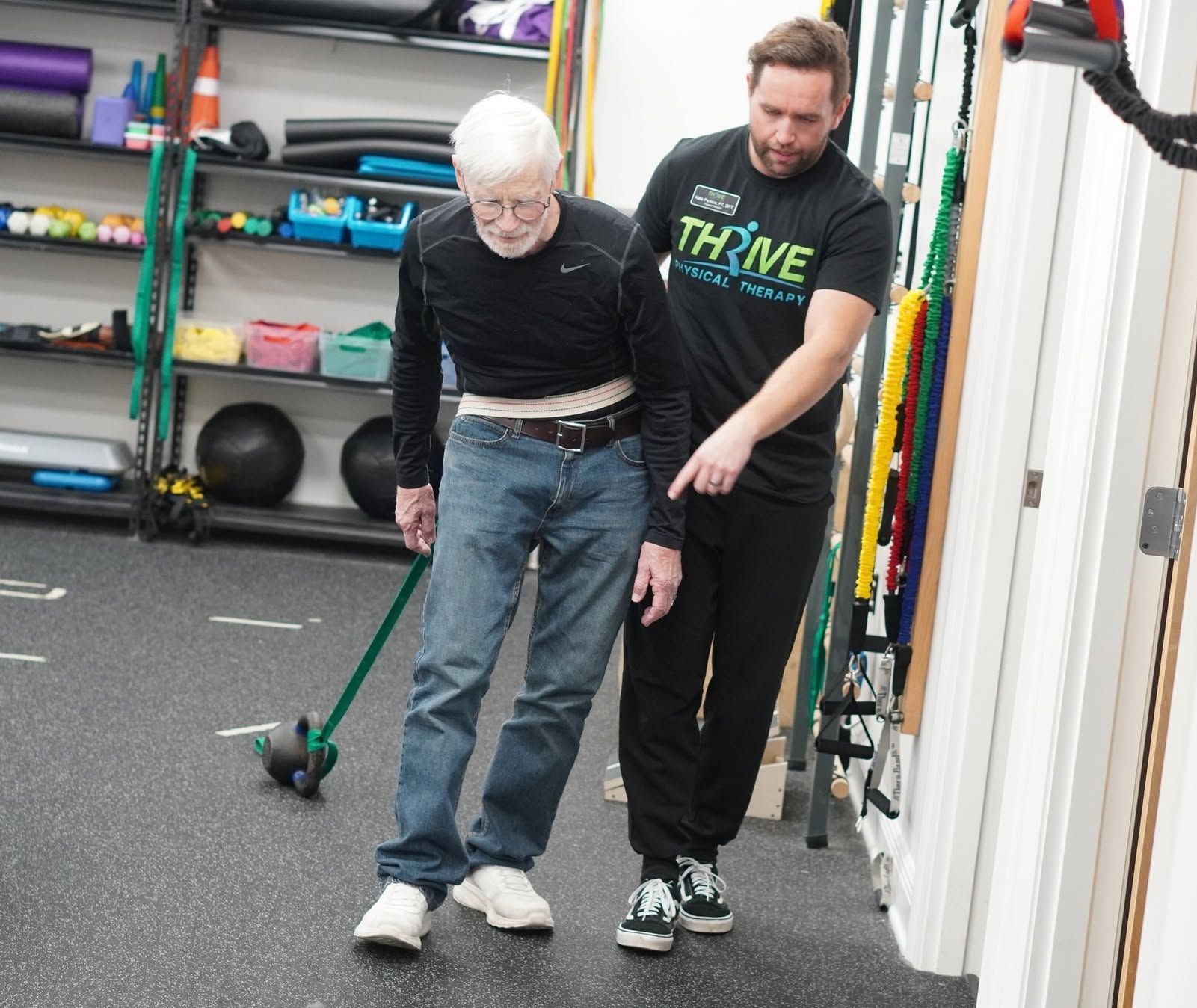
Vestibular evaluation at Thrive examines how the inner ear, visual system, and proprioceptive system are contributing to balance and spatial orientation during movement. Assessment may include evaluation of eye movement responses to head motion, positional testing to identify benign paroxysmal positional vertigo, and standing and walking tasks that reveal how those three sensory systems are functioning under different conditions. Treatment follows directly from those findings and may include canalith repositioning procedures, vestibular adaptation exercises, habituation protocols, or progressive balance and gait training depending on the clinical picture.
Request an evaluation at Thrive Physical Therapy to assess the vestibular and balance factors contributing to your dizziness or unsteadiness.
How Vestibular Therapy Addresses the Sources of Dizziness
The vestibular system depends on coordinated input from the inner ear, eyes, and body's proprioceptive receptors—symptoms develop when those inputs become mismatched or when one system's function is disrupted. Physical therapists at Thrive trained in vestibular rehabilitation identify which component of that system is driving symptoms, because the canalith repositioning procedure used for BPPV is not the appropriate intervention for the gaze instability or proprioceptive reliance that characterizes other vestibular conditions. Distinguishing between those presentations through evaluation is what separates targeted vestibular treatment from generalized balance training.
As vestibular rehabilitation progresses, patients often notice changes in how specific head movements or visual environments affect symptom intensity, how steadily they can walk without needing to hold surfaces, and whether position changes continue to produce dizziness at the intensity present at the start of treatment. Thrive reassesses those functional indicators throughout care to determine how the treatment plan should advance.
Vestibular and balance therapy at Thrive is appropriate for patients managing benign paroxysmal positional vertigo, vestibular neuritis, post-concussion dizziness, unilateral vestibular loss, and age-related balance changes that affect confident daily movement. Evaluation determines which condition is present and which treatment approach is clinically indicated for that specific presentation.
Questions About Vestibular and Balance Therapy
Vestibular physical therapy is a specialty that patients with dizziness or unsteadiness may not be familiar with as a clinical option. These questions address how vestibular evaluation and treatment are structured at Thrive Physical Therapy.
What conditions does vestibular and balance therapy address?
Vestibular physical therapy addresses BPPV, vestibular neuritis, post-concussion dizziness, unilateral vestibular loss, and balance deficits related to aging or neurological changes affecting the sensory systems involved in stability.
What does the vestibular evaluation involve?
The therapist assesses eye movement responses to head motion, conducts positional testing to identify BPPV, and evaluates standing and walking balance tasks that reveal how the inner ear, visual, and proprioceptive systems are functioning.
What is BPPV and how is it addressed in physical therapy?
Benign paroxysmal positional vertigo occurs when calcium carbonate crystals in the inner ear shift into the semicircular canals; physical therapists use repositioning maneuvers specifically designed to move those crystals back to their appropriate location.
How does vestibular therapy differ from general balance training?
Vestibular therapy targets the specific sensory integration mechanisms driving symptoms—whether inner ear dysfunction, gaze instability, or proprioceptive compensation—rather than applying generalized strengthening or coordination exercises.
How does outdoor activity and heat exposure common in Lake Charles interact with vestibular symptoms during rehabilitation?
Physical therapists at Thrive consider how heat, hydration status, and visually complex outdoor environments affect vestibular symptoms when structuring rehabilitation progressions for patients active in Southwest Louisiana conditions.
Thrive Physical Therapy provides vestibular and balance evaluation in Lake Charles for patients managing dizziness, vertigo, and unsteadiness that affect safe daily movement. Request an appointment to begin a systematic assessment of the factors driving your symptoms.
Speak With A Board Certified Specialist Today!
Is your pain making it difficult for you to concentrate?
Are you hoping it will just go away but it’s still hurting you?
If you answered “Yes” to any of those questions, you should call us and make an appointment to see one of our qualified Physical Therapist. We will interview you, find out your problem, layout the customized plan for you and work with you personally.
Call one our offices now at (337) 990-5621 or request an appointment:

Ask a Specialist
Contact Us
We will get back to you as soon as possible.
Please try again later.